
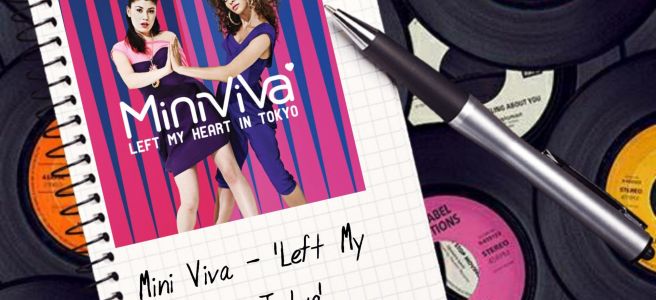

Well, three weeks in and it’s safe to say we, like Stella before us, have got our groove back with this here Pop Essays writing malarkey. So it is that we dive headlong into our entry this week, and the launch of one of the most sorely underrated projects with the greatest British pop producers of the 00s at the helm…
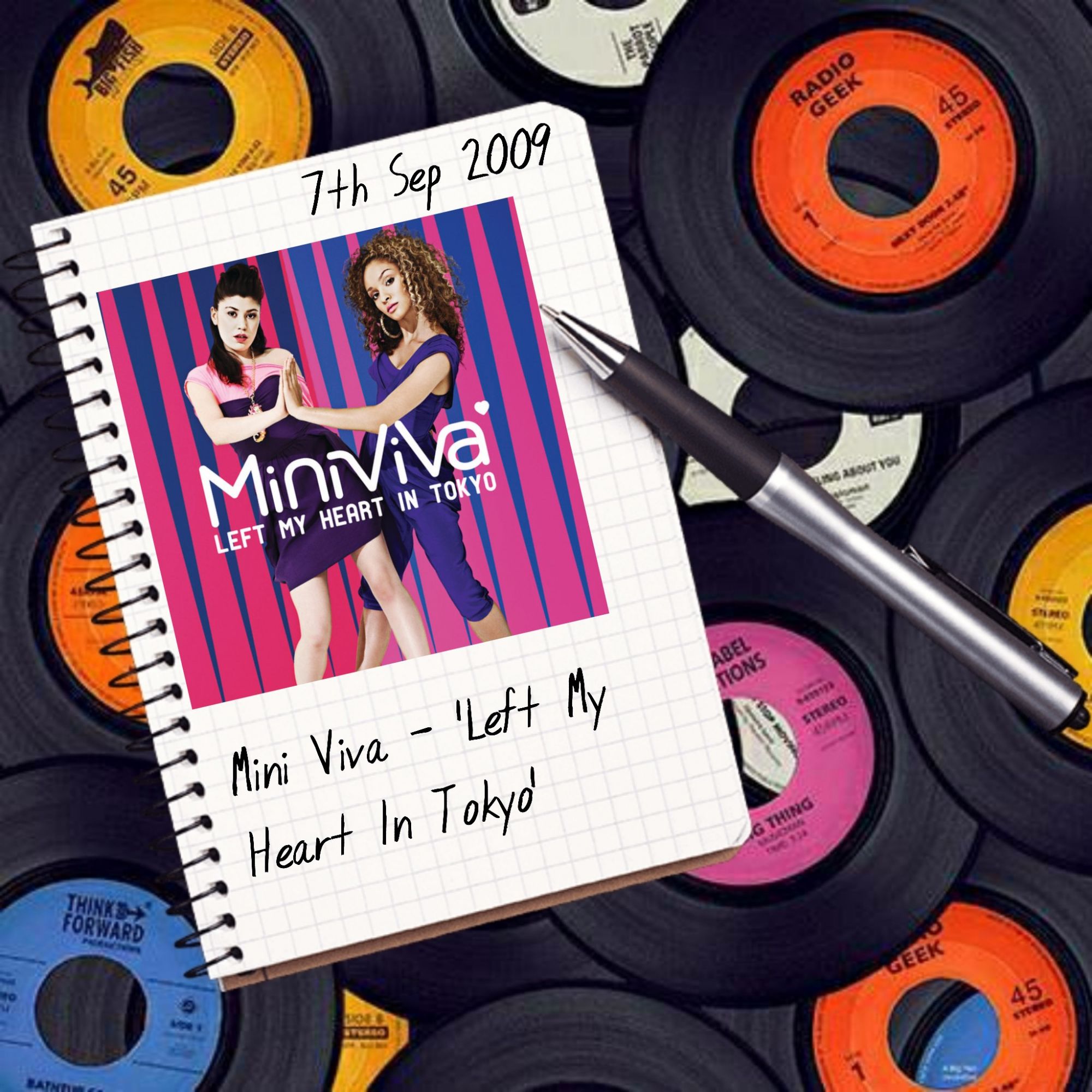
- Artist: Mini Viva
- Song: Left My Heart In Tokyo
- Released: 07/09/2009
- Writers / Producers: Miranda Cooper / Brian Higgins / Annie Strand / Carla Marie Williams / Fred Falke / Xenomania
- Highest UK Chart Position: #7
- Chart Run: 7 – 9 – 10 – 11 – 23 – 38 – 55 – 65 – 79 – 89
At some point on this series, we had to get here: Mini Viva. A lively duo discovered and produced by Xenomania, for whom all the ingredients on paper pointed to a winner, and yet in the long term, were anything but.
It’s important, however, that we understand how it got here. So let’s rewind to 2008. Both Brian Higgins and Miranda Cooper, and by definition their star muses, Girls Aloud, were in something of a purple patch.
After a million selling, chart topping greatest hits (The Sound of Girls Aloud), and another platinum seller with the Tangled Up album, plus further success with Sugababes and Alesha Dixon, and collaborations with more unusual artists, some of which saw the light of day (Pet Shop Boys) and others which didn’t (Franz Ferdinand), they were arguably approaching the cultural zeitgeist.
By the time it got to the Out of Control album and the huge, chart topping and BRIT winning success of “The Promise”, although it wasn’t spoken about in so many words, it was common knowledge that, six years into their career, Girls Aloud were edging closer to a hiatus of sorts, largely instigated by Nadine Coyle now living in Los Angeles. We first wrote about how their record label, Polydor / Fascination, responded to this turn of events on another blog in this series.
Brian however, who has always had his mind at the forefront of the curve, was arguably preparing well in advance. After success with launching new Aussie teenage singer Gabriella Cilmi with her worldwide hit “Sweet About Me” through Universal Island, his attention was turning in-house to discovering the talent himself and presenting it fully formed to labels, rather than them bringing the talent as had been the case.
Xenomania Records was thus established, as he hired an A&R person, Sheila Burgel, and a hunt began for new talent to bring on board. Several new bands and artists were discovered or formed as a result.
Mini Viva were two plucky Northern girls – Britt Love and Frankee Connolly – who were scouted at auditions in 2007, where Xenomania had called themselves Select Music UK, so as not to mention who they were. The girls had naturally bonded away from the ream of more “stage school” girls that had responded to the ad looking for singers.
And certainly, the concept was unique; not since the 80s and the hey day of Wham! or Mel & Kim had anyone successfully marketed a duo in pop. What followed was a two year process of writing, recording, and carefully crafting their look and sound, which was indebted heavily to the kind of fantastical, super kawaii “Hello Kitty” style of presentation. There was no doubt that they were being positioned as the act that was to be carrying the baton for the future thinking pop Girls Aloud had established so well.
“Left My Heart In Tokyo” had started life back in 2007 as well; it was co-written by both Norwegian electropop legend Annie, who had been working on her second album Don’t Stop with the team at the time, and Fred Falke, the French DJ and producer who was best known for his early 00s floorfiller “Intro” with Alan Braxe.
First appearing as dub mixes on a Hed Kandi compilation and a self-released limited 10″ vinyl, under their own World’s Finest label as far back as November 2008 was setting the foundations early, and generating the first waves of online buzz. By May 2009, Mini Viva had been signed by Lucian Grainge, Universal’s chairman and CEO, to the reactivated Geffen imprint of Polydor.
And thus began the steady but intense build of hype and publicity, as Mini Viva established a live following from a showcase event Xenomania put on featuring a number of their new artists, as well as playing the trendy Camden Crawl festival and landing support slots on tour with The Saturdays, a marker if any of how they wanted to diversify their audience.
Simon Fuller at 19 Management was bought on board to represent them internationally, they were named “Band of the Day” by The Guardian newspaper, landed two page spreads in NME and four page spreads in Q Magazine tipping them as the next big thing, BBC Breakfast interviewed both them and Brian and Miranda at the Xenomania headquarters at Westerham in Kent, and they were welcomed with open arms by Radio 1, who immediately put them on the A list six weeks ahead of release.
Compare and contrast this with the near universal stubborn resistance that Girls Aloud were first met with after Popstars: The Rivals, and the difference is staggering. True, it speaks more about the music media not wanting to be caught out a second time and being fickle as fuck then it does about the overall quality of the music, but it’s almost as if other factors were of greater importance.
Because let’s not forget there was the music in the centre of all this. And “
…Tokyo” is flawless; the dictionary definition of launch single material. Pounding, thumping, bass heavy techno pop is augmented with a kitsch Oriental sounding synth melody line that shouldn’t work but does, and is full of the tongue twisting lyrical soundbites a good Xenomania production is renowned for: “My baby knows what I want / He’s getting me and my thing / He better take what I got / Or he won’t see me again” being one example, and “17 and dumb, look at me, I know right from wrong / You and me, we got something on / And I don’t need to hear that karma come” being another.
And the chorus, when it hits, is a pure serotonin rush, up there with “Something Kinda Ooooh” and “The Show” for its briskness and efficiency: “And I left my heart in Tokyo / Down by the river, don’t you know / I had to let it go, nobody know know knows that / I left my heart in Tokyo / Down by the river, don’t you know / I had to let it go / Nobody no can bring it home”.
Coupled with a neon bright promo video with kaleidoscopic city backdrops directed by the up and coming Ray Kay, who had just done Lady Gaga’s video for “Poker Face” and who would shortly be making the iconic first video as a solo artist for Cheryl Cole, as she was then (“Fight For This Love”), all the signs were pointing to a massive hit; indeed, in the Q magazine piece, it said “The general consensus is that “Left My Heart In Tokyo” is heading to number one when it is released”.
So it’s entry and peak of #7 in September 2009 was, on the one hand, job well done. But on the other hand, the intense level of pre-release exposure and media hype almost sat at odds with what people had been expecting – or to put it another way, it was deemed less successful than it should have been. However, that was missing the point entirely; Xenomania at its best has always been about delivering the unexpected and challenging the status quo, which they unquestionably had musically.
Indeed, there was nothing to suggest that Mini Viva couldn’t build on or at least consolidate this initial success. Except that sheer record label hubris saw to it that that chance never came. Their second single, the glacial sounding sad-banger “I Wish”, despite sounding like another huge hit, was foolishly released by Geffen in the week of the Christmas chart that December. It struggled for airplay, and tanked out at #73.
To make matters worse, a gap of four months elapsed before the third single, “One Touch”, arrived in April 2010, which was met with even more airplay resistance, and failed to make even the top 100, peaking at a non-canon #123. Their debut album, already pushed back multiple times, quietly disappeared from the release schedules. The months passed, and Mini Viva disbanded.
Then again, there is one overwhelming factor that can’t be discounted as to why it ultimately didn’t work. At the time of Girls Aloud taking their hiatus, it was presumed that it was to be a year’s break. So to that end, it could be argued that the wider public might have been reluctant to throw their weight behind Mini Viva as torchbearers for their sound for just 12 months. A ridiculous notion when there was room for both, but it’s sadly true.
Except that owing to several mitigating factors, that year’s break ultimately lasted three years. And aside from their 10th anniversary comeback single “Something New” in 2012, “All Fired Up” for The Saturdays and “You Bring Me Joy” for X Factor 2011 alumni Amelia Lily – all of which hit the top 3 – commercial success never truly came to the magnitude that it once did in that glorious six year run between 2002 and 2008 for Xenomania thereafter either.
It is still a crying shame that we never got the full album from Mini Viva – namely because the six track sampler we had in our possession sparkled with promise (and we’d still give our right arm for its full digital issue on DSPs at least). But let us not take anything away from the fact that, even at the centre of a bright but briefly burning career, they turned out some of the finest examples of late 00s British pop at its best.
Don’t forget to follow our Pop Essays playlist on Spotify, which includes this and all the songs we’ve written about. What are your memories of this week’s featured song or artist? Let us know your thoughts in the comments below or message us on our Instagram.

 The Niche Reference
I adore Mini Viva. Very sad how things ended for the duo, but what songs we do have are still absolute bangers. This was a great write-up; I somehow didn’t know Annie cowrote Tokyo but I can totally feel that now. Cheers!
LikeLike